 The 15th International Conference on Computer and Communications Management
 Special Session
Special Session 2: Healthcare as a Service (HaaS): Managing the Evolution of IoMT
Description:
Healthcare systems are currently transitioning toward a model
known as Healthcare as a Service (HaaS). In this framework,
medical resources such as equipment, professional expertise, and
patient data are redefined as assets that are visualized and
optimized through digital technology. The Internet of Medical
Things (IoMT) serves as the fundamental infrastructure for this
shift, providing real-time connectivity across clinical
environments.
From a practical perspective, IoMT offers significant benefits
for clinical efficiency and patient outcomes. Implementing an
IoT powerstrip device, such as Loca-Moni, allows for the
tracking and management of medical equipment without requiring
physical modifications to the devices themselves. This improves
the operational workflow for clinical engineers and ensures that
resources are available when needed. Furthermore, Software as a
Medical Device (SaMD) enables continuous monitoring and
participatory medicine, allowing treatment to move beyond the
hospital and into the daily lives of patients.
Despite these advancements, several critical challenges persist
in the management of medical information systems. The
integration of diverse devices into hospital networks increases
cybersecurity vulnerabilities, necessitating the development of
robust trust foundations. There is also a significant economic
gap, as the high costs of digital infrastructure are often not
supported by existing reimbursement structures. Additionally,
the rapid pace of digital innovation frequently conflicts with
the slow and rigid processes of medical device regulatory
approval. In this session, we would like to focus on the
management of these evolving IoMT technologies, addressing both
their practical implementation and the systemic hurdles within
the healthcare industry.
Session Organizers
▪ Assoc. Prof. Shintaro Oyama, Nagoya University, Japan &
University of the Ryukyus, Japan
▪
Assoc Prof.
Takanobu Otsuka, Nagoya Institute of Technology, Japan
▪
Asst. Prof. Kosuke Shima, Nagoya Institute of Technology, Japan
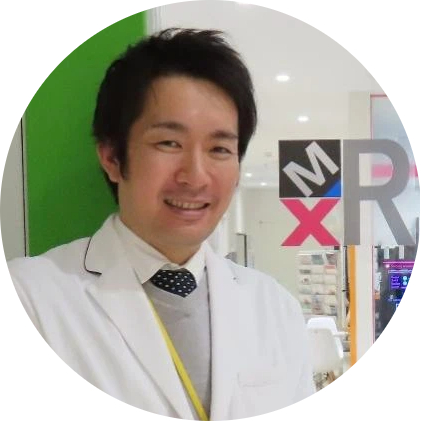 Assoc. Prof. Shintaro Oyama
Nagoya University, Japan & University of the Ryukyus, Japan
Bio: Shintaro Oyama is an Associate Professor at the Center for
Preventive Medical Engineering, Nagoya University, and a
Specially Appointed Associate Professor at the Center for
Advanced Medical Research, University of the Ryukyus. He
graduated from Nagoya University School of Medicine in 2007 and
trained as an orthopedic and hand surgeon before joining RIKEN
in 2013, where he conducted research in imaging informatics and
optical quantum engineering. After earning his PhD in 2017, he
led digital transformation initiatives, including the Smart
Hospital Project, at Nagoya University Hospital. His work spans
clinical AI, IoT-based workflow optimization, and
community-oriented digital health solutions, collaborating with
industry and government projects such as SCOPE and NICT. He has
been instrumental in AI education programs across medical
fields. Since 2025, he also serves as Deputy Director of the
Startup Promotion Office at the Tokai National Higher Education
and Research System.
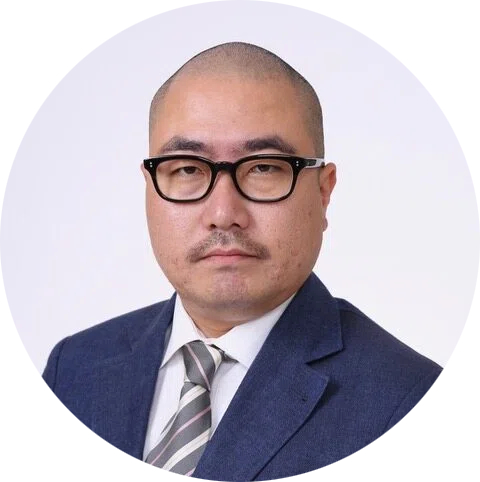 Assoc Prof. Takanobu Otsuka
Nagoya Institute of Technology, Japan
Bio: Takanobu Otsuka is an Associate Professor in the
Department of Computer Science at Nagoya Institute of
Technology, Japan. His research interests focus on IoT systems,
machine learning, sensor data analysis, and explainable
artificial intelligence (XAI). He has been actively engaged in
interdisciplinary research projects related to smart
manufacturing, healthcare monitoring systems, and predictive
maintenance using data-driven approaches. He has published
numerous papers in international conferences and journals and
has contributed to several collaborative research initiatives
with industry and public institutions. His current work
emphasizes the development of practical and interpretable AI
solutions for real-world applications, particularly in
industrial and healthcare domains.
 Asst. Prof. Kosuke Shima
Nagoya Institute of Technology, Japan
Bio: Kosuke Shima received his B.E. degree in Mechanical
Engineering from Nagoya Institute of Technology in 2014, his
M.E. degree in Computer Science from the same university in
2016, and his Ph.D. in Engineering in 2021. He was appointed as
a specially appointed assistant professor at Nagoya Institute of
Technology in 2021, and has been serving as an assistant
professor since 2022.
The topics of interest include, but are
not limited to:
• Design and implementation of IoMT infrastructure
• Healthcare as a Service (HaaS) and system integration
• Economic sustainability and cost-management of hospital DX
Submission method
Submit your Full Paper (no less than 8 pages) or your paper
abstract-without publication (200-400 words) via
Online Submission System, then choose
ICCCM 2027-Special Session 2 (Healthcare as a Service (HaaS): Managing the Evolution of IoMT)
Full Paper Template (MS Word)
Full Paper Template (LaTeX Template)